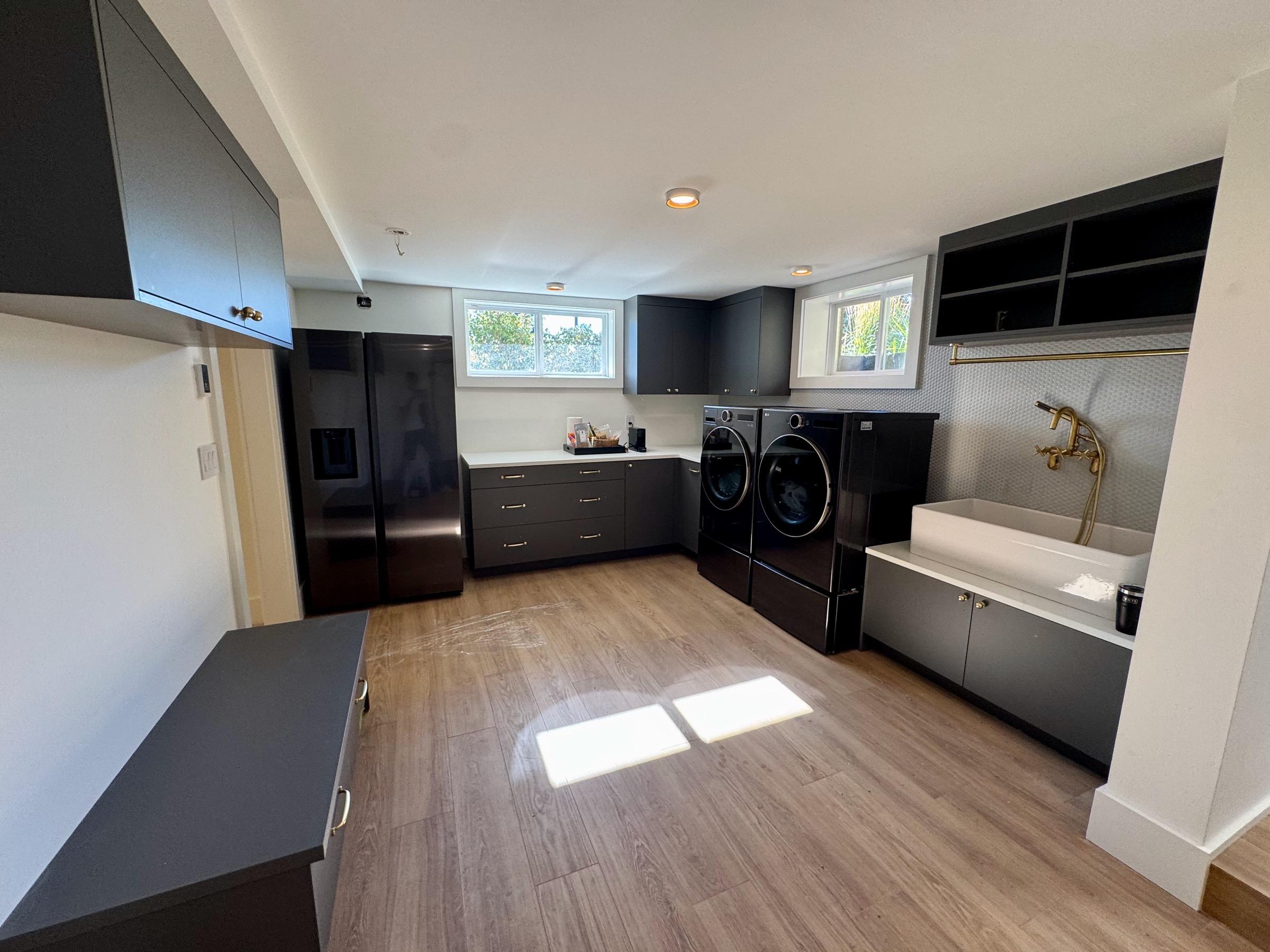
Home Office & Gym
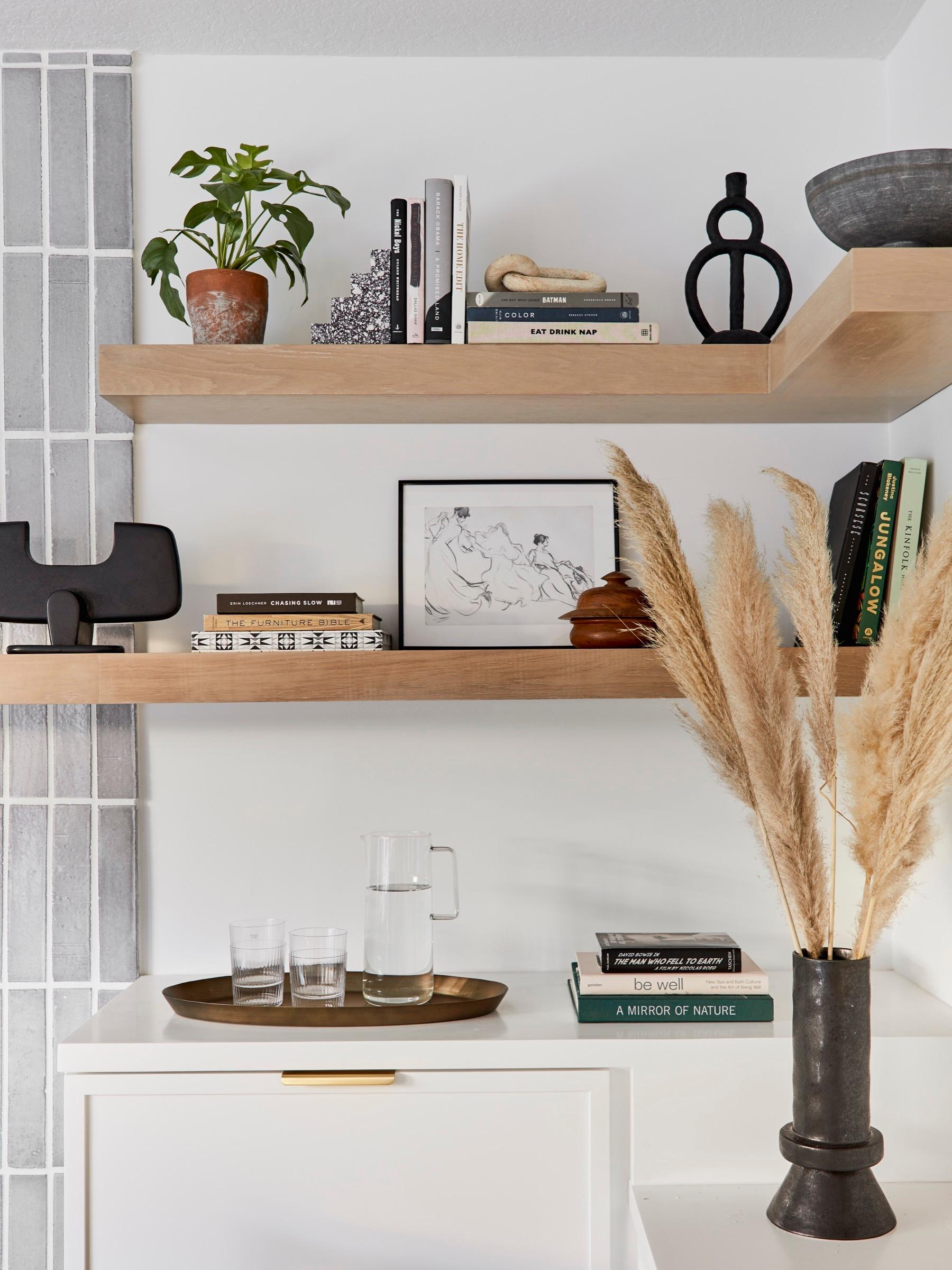
It's what's behind the drywall.
We set up the space so you can focus on the work. Desk and storage systems, tech integration, securely mounted gym equipment, and electrical updates done right.
What's included
- Desk and storage system installation
- Cable management and tech integration
- Wall-mounted monitor and TV installation
- Securely mounted gym equipment and mirrors
- Flooring protection and rubber mat installation
- Electrical outlet and USB port upgrades
A home office and a home gym look like opposite projects, but they share one problem: things get mounted to walls and then loaded. A 65-inch TV on an articulating arm. A dual-monitor bracket that gets pushed and pulled all day. A wall-mounted squat rack, a pull-up bar, a full-length mirror. Shelving loaded with books. Each one is only as good as what it's fastened into, and in a Seattle house that could be drywall, 100-year-old plaster and lath, brick, or a concrete foundation wall.
So every office and gym project starts with what's behind the wall.
Quick answer: Crest & Level sets up home offices and home gyms in Seattle homes: desks and storage systems, shelving, cable management, wall-mounted monitors and TVs, wall-mounted gym equipment and mirrors, and rubber or tile flooring for garages and basements. Mounts are anchored into framing, blocking or masonry rated for the load, and new outlets are installed by a licensed electrical contractor.
Mounting myths I hear on the first visit
"The anchors came with the mount, so they'll hold." The anchors in the box are designed for an ideal wall, which an old Seattle house rarely has. TVs, monitor arms and gym equipment go into studs, added blocking or properly rated masonry anchors. An articulating arm multiplies the force on the wall every time it's pulled out.
"The stud finder found a stud." In plaster-and-lath walls, stud finders often read the lath, the plaster keys or nothing at all. I confirm the framing before drilling. When the studs aren't where the mount needs them, I add blocking or a mounting board that spans two studs and finish it so it looks deliberate.
"A pull-up bar is just a big shelf bracket." Not even close. A pull-up bar takes your full body weight plus the jolt of every rep, pulling outward on the fasteners. Wall-mounted racks and pull-up bars need to be fastened into framing or masonry as the manufacturer specifies, and some walls shouldn't carry them at all. Ceiling-mounted gear depends on the joist size and direction, so I check what's up there first.
"Concrete walls will hold anything." Poured concrete holds well with the right anchors. Old basement walls in Seattle can be crumbly concrete or brick with soft mortar joints. Anchors go into solid material, not mortar, and I test before trusting them.
The office: built for long days
- Desk and storage systems. A built-in desk, wall-hung shelving or a freestanding system anchored for safety, sized to the room and to how you work. Built-ins are scribed to old walls the same way as any cabinetry. See Cabinetry and Finish Carpentry.
- Monitors and TVs. Mounted at a comfortable eye height for the chair you actually use, into framing or blocking.
- Cable management. Cords routed through the desk, behind trim, or in surface raceway so the room doesn't look like a server closet. In-wall power for a mounted TV requires the right rated kit, or a new outlet installed by an electrician.
- Outlets and USB ports. New or relocated outlets are electrical work, done by a licensed electrical contractor and permitted through SDCI. I plan where they go and coordinate the work.
- Basement offices. Lower levels in Seattle homes run cool and damp. Furniture and built-ins stay off the slab, nothing wood touches the concrete, and a dehumidifier is often the best upgrade. More on that is on the Queen Anne page.
The gym: built to take a beating
- Wall-mounted equipment. Racks, pull-up bars, rings and storage go into framing or masonry rated for the load, following the manufacturer's spec.
- Mirrors. Large gym mirrors go on a mounting channel or rated clips into framing. Mirrors in a gym get bumped, so placement matters as much as fastening.
- Flooring. Rubber mats or interlocking tiles protect the slab and your joints. Under heavy weights, thicker rubber is worth it.
- Air and humidity. Garage and basement gyms in Seattle get damp in winter. Airflow and a dehumidifier keep equipment from rusting and mats from mildewing.
A Magnolia garage floor, in one afternoon
This summer I installed Armor Garage Heavy Duty Tiles in a Magnolia garage that had a cracked, uneven slab. That's typical of older Seattle garages, which have decades of settling, a lifted control joint and a corner that dipped after the pour. The usual advice is to grind, level and then coat. Solid PVC interlocking tiles skip most of that. They're rated to bridge cracks and dips up to three inches wide, they float over the existing slab with no glue, and they lock on every edge. A two-car garage went from a cracked slab to a clean, finished floor in a single day. The homeowner now says it's her favorite room in the house. The full write-up is in Garage Floors That Don't Need a Perfect Slab.
Where the materials come from
Shelving, desk tops and blocking come from Dunn Lumber. Structural fasteners and masonry anchors come from Tacoma Screw Products. Mounting hardware and everyday supplies come from Five Corners Hardware and Tweedy & Popp. Garage tile ships directly from the manufacturer.
When it's bigger than us
Finishing a basement or garage into living space, adding circuits or a subpanel for equipment, or moving walls to enlarge a room is permit work that may need a general contractor and an electrician. If your project is heading that way, I'll tell you early and point you to people I trust.
What to expect
- First visit: I walk the house with you, look at the specific problem and what's around it, and tell you plainly what I'd do and what I wouldn't.
- Estimate: A written, itemized scope, including what's likely to change once a wall or floor is opened. Why I don't rely on fixed bids.
- Scheduling: I will provide an accurate plan for scheduling and completing the work.
- Cleanup: Dust containment as needed with your house left clean every day.
Home office and gym questions I hear most
Can a TV be mounted on a plaster wall? Yes, if the mount is fastened into the studs behind the plaster, or into blocking or a mounting board spanning two studs. Plaster alone, or plaster with the anchors from the box, isn't a safe base for a TV, especially on an articulating arm.
Can I mount a pull-up bar or squat rack on my wall? Often, but it depends on the wall. The equipment needs to be fastened into framing or solid masonry as the manufacturer specifies. Some walls, like crumbly basement walls or walls with framing in the wrong place, need blocking or a different approach.
What flooring works for a garage gym with a cracked slab? Solid interlocking PVC tiles can bridge cracks and dips without grinding or leveling the slab first. Rubber mats work well in lifting areas. Both protect the concrete and your joints.
Can you add outlets for my home office? New outlets are electrical work, which in Washington is done by a licensed electrical contractor and permitted through SDCI in Seattle. I plan where they go and coordinate the work.
Related reading
- Closet & Entryway for storage and built-ins
- Home Technology & Security for network access points and TV mounting
- Fixture Installation for hardware and lighting
- Magnolia homes and their quirks
Let's look at it together
Call or text (564) 444-8388 and tell me about the room you're setting up, or schedule a visit.
Recent projects
All projects