Aging in Place Home Assessment
Stay in the home you love — safely, comfortably, on your terms.
Aging in place means making a home safe and easy to live in as you get older, so you can stay put instead of moving. Crest & Level starts with an in-home assessment, gives you a prioritized list of changes, then does the work — grab bars, handrails, lighting, bathroom updates and more — built to fit your home.
What's included
- A written report with photos of each issue we found
- Every recommendation ranked: fix now, plan soon, consider later
- Cost ranges for each item so you can budget and decide
- No pressure to hire us for the work — the report is yours to use however you want
Who This Is For
- Homeowners planning ahead. You're not in trouble today, and you'd like to keep it that way. Small changes now beat a rushed remodel after a fall.
- Adult children worried about a parent. You've noticed the stairs are getting harder or the shower feels risky. We'll give you a clear, honest picture and a plan the whole family can agree on.
- Anyone recovering from surgery or an injury. Short-term needs often reveal long-term fixes worth making.
Start With the Assessment
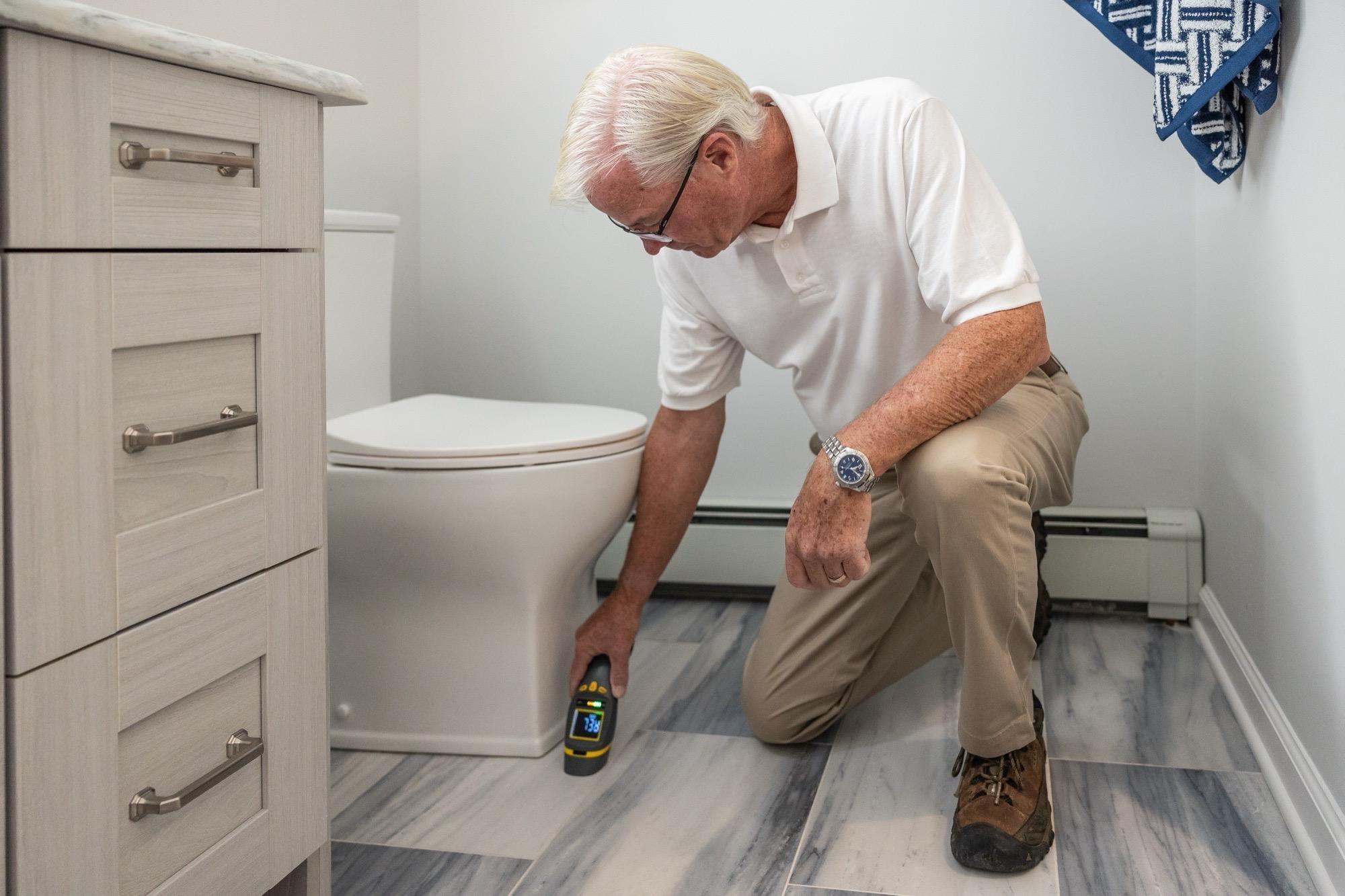
Every project starts with a walk-through of the whole home. We look at how you actually move through your day, not just what a checklist says.
What we look at:
- Entries and exterior steps — railings, step height, lighting, a place to set bags down
- Bathrooms — tub and shower access, grab bar locations, toilet height, slip resistance
- Stairs and hallways — handrails on both sides, lighting at top and bottom, trip hazards
- Flooring — thresholds, transitions, loose rugs, uneven surfaces
- Doors and hardware — doorway widths, knobs vs. levers, how doors swing
- Kitchen — reach, storage heights, task lighting
- Bedroom — path to the bathroom at night, lighting, bed height
- Lighting throughout — dark corners, switch locations, nightlights
What We Build
Most homes don't need a major remodel. The highest-impact changes are often the simplest.
Quick safety fixes
- Grab bars installed into solid blocking (not drywall anchors)
- Handrails on both sides of stairs and at exterior steps
- Lever door handles and faucet controls
- Brighter, better-placed lighting, motion lights and illuminated switches
- Threshold ramps and smoothed floor transitions
Bigger upgrades
- Tub-to-shower conversions and low-threshold or curb-less showers
- Comfort-height toilets and built-in shower benches
- Widened doorways and offset hinges
- Pull-out shelving and lowered storage in kitchens and closets
- Exterior step rebuilds, landings and railings
See our Aging in Place Modifications service for more on the work itself.
Built to Match Your Home
Seattle's older homes are beautiful, and they weren't designed with aging in mind: steep front steps, narrow doorways, clawfoot tubs and second-floor-only bathrooms. Safety changes don't have to make your house look institutional.
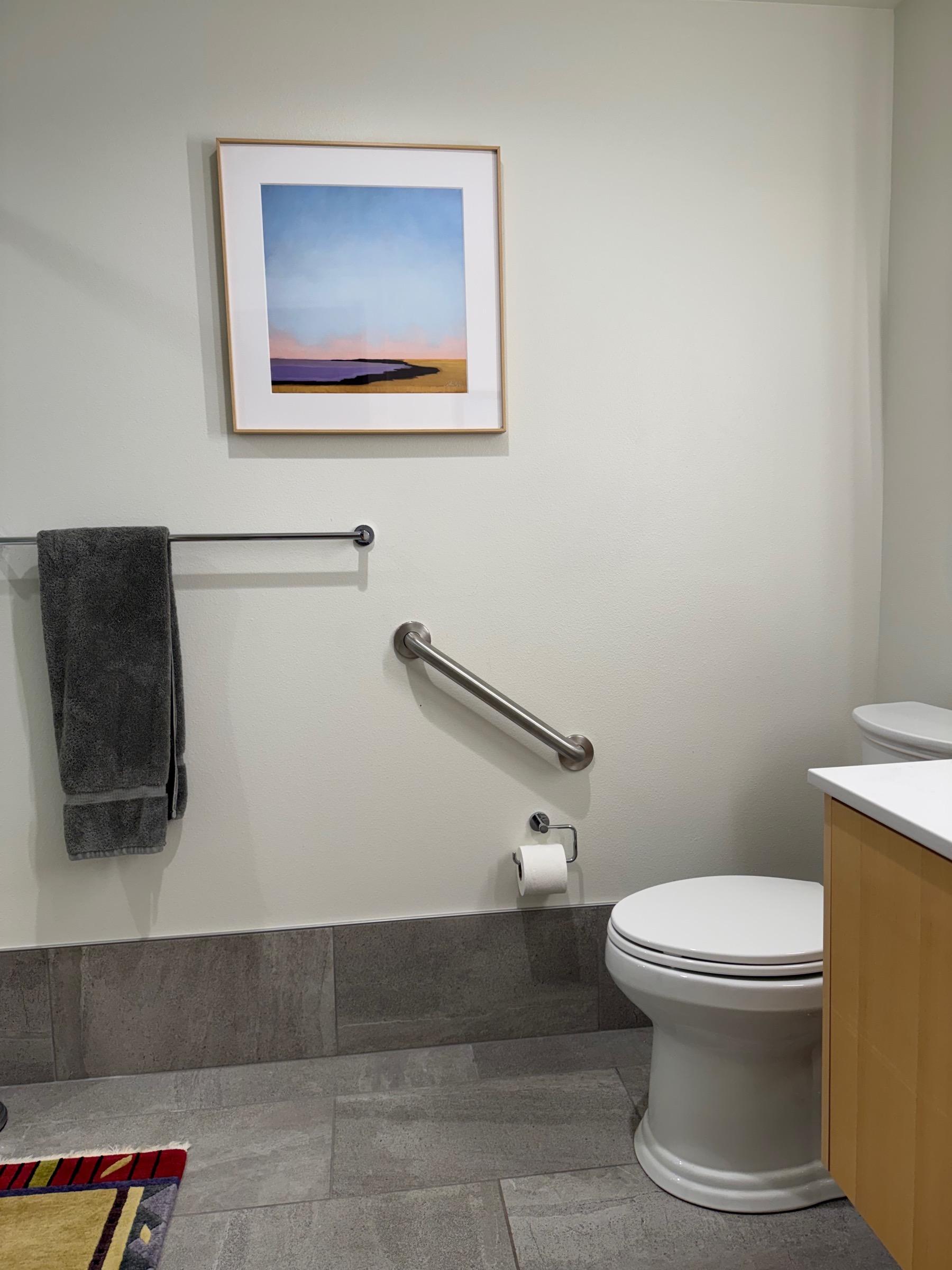
We match existing trim, choose grab bars that double as towel bars, and tile showers that update and refresh your bathroom. Your home should feel like your home, just easier to live in. See a recent example: grab bars added throughout a West Seattle condo, installed in a single day.
What to Expect
| Step | What happens | Timing |
|---|---|---|
| 1. Call or book online | Quick conversation about your home and concerns | 10–15 minutes |
| 2. In-home assessment | Full walk-through, room by room | About an hour |
| 3. Written report | Prioritized recommendations with cost ranges | Within 5 business days |
| 4. Planning | Pick what to do now and what can wait | On your schedule |
| 5. The work | Most quick fixes done in a day or two; bathroom projects take longer | Varies by scope |
Assessment fee: $500 is credited toward any work you hire us for within 60 days.
Typical costs: Quick safety fixes like grab bars, handrails and lever hardware are often a few hundred to a couple thousand dollars for a whole house. Bathroom conversions and doorway widening are larger projects. Your report includes a cost range for every item.
Where We Work
We serve Queen Anne, Magnolia, Wallingford, Fremont, Capitol Hill, Bryant and Ballard.
Ready to Make Home Easier?
The best time to make these changes is before you need them. Schedule an assessment and you'll walk away with a clear plan whether we do the work or not.
Frequently Asked Questions
What is an aging in place assessment?
An aging in place assessment is a room-by-room walk-through of your home to find safety risks and accessibility barriers. It covers entries, bathrooms, stairs, flooring, lighting and hardware. You get a written report that ranks each recommendation by urgency and includes cost ranges, so you can plan changes on your own timeline.
How much does an aging in place assessment cost?
Our assessment is $500 and takes about an hour. The fee is credited toward any work you hire us for within 60 days.
How much do aging in place modifications cost?
It depends on the home and what's needed. Many homes get the biggest safety gains from simple fixes — grab bars, handrails, lighting and lever hardware — which usually cost far less than people expect. Larger projects like converting a tub to a walk-in shower cost more. Your assessment report includes a cost range for every recommendation.
What should I fix first?
Start where falls are most likely: bathrooms, stairs and entries. Grab bars by the toilet and in the shower, handrails on both sides of stairs, and good lighting on the path from the bedroom to the bathroom are usually the top priorities. Your assessment will rank changes for your specific home.
When should I start making aging in place changes?
Before you need them. Most people start in their late 50s to mid 70s, often after watching a parent struggle. Planning early lets you make changes on your schedule and budget, and fold them into other projects instead of rushing after a fall or a hospital stay.
Does Medicare or insurance pay for home modifications?
Original Medicare generally does not cover home modifications like grab bars or shower conversions. Some Medicare Advantage plans offer limited home safety benefits, and a doctor-ordered occupational therapy home evaluation may be covered. Check with your plan. Some accessibility modifications may also qualify as deductible medical expenses (ask your tax advisor).
What's the difference between your assessment and an occupational therapist's?
An occupational therapist looks at your health, mobility and daily habits, usually through a doctor's referral. Our assessment focuses on the home itself — what to change, how to build it and what it costs. The two work well together, and we're glad to work from an OT's recommendations.
My parent lives alone. Can I arrange an assessment for them?
Yes. Many of our assessments are arranged by adult children. We're happy to have you there in person or on the phone, and we'll share the report with whoever your parent wants included.
Will grab bars and ramps make my house look institutional?
They don't have to. We choose finishes that match your home, use grab bars that double as towel bars, and match existing trim and tile. In older Seattle homes especially, we make changes that look like they belong there.
Do I have to hire you for the work after the assessment?
No. The report is yours to keep and use with any contractor. If you'd like us to do the work, we'll schedule it in whatever order makes sense for you.
Recent projects
All projects