
· By Mark Tindall
Staying Put: Why Aging in Place Planning Matters, and Where to Start
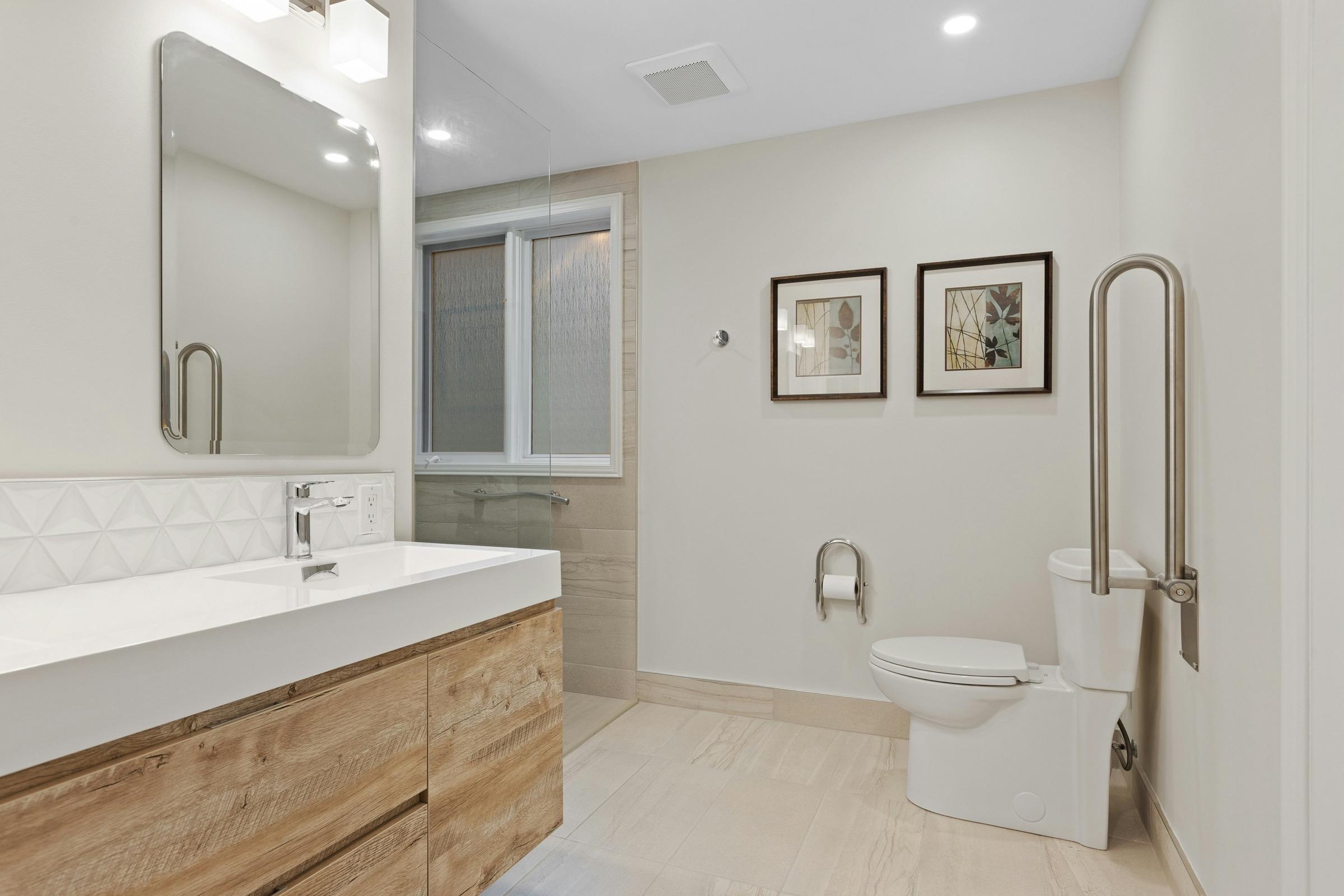
The short version: Falls are the leading cause of injury for adults over 65, and most of the risk in a home can be addressed with small, inexpensive changes. Start with trip hazards, put grab bars where your body actually needs them, focus on bathrooms and entryways first, and make changes gradually rather than in the middle of a crisis.
Many of the homeowners I talk to have no plans to go anywhere these days. They love their homes, their neighborhoods and their views, and they intend to stay put for a long time. I get it and feel exactly the same way!
The trouble is that many older homes weren't exactly designed with the long haul in mind. Steep front steps on hillside lots, narrow staircases, a clawfoot tub you have to climb in and out of, laundry in the basement. Add six months of rain-slicked steps and dark evenings and you have a house that asks a lot of the people living in it. A recent aging in place assessment revealed a variety of risks that had simply been ignored for years: an extremely steep driveway, poor lighting, high pile rugs, a garage entrance staircase with 2x4 handrails and a treacherous landing to navigate while trying to open the door outwards to simply enter the house.
The good news is that making a home safer for the years ahead rarely requires tearing it apart. Here are some good places to start.
Fall Prevention Comes First
If you only do one thing, focus on this. According to the CDC, falls are the leading cause of injury for adults 65 and older, and about one in four older adults report a fall every year. Many of those falls happen at home, on the way to the bathroom at night or tripping over something that's been sitting in the same spot for twenty years.
The fixes are often surprisingly simple and inexpensive:
- Secure or remove throw rugs. That favorite runner in the hallway is a classic trip hazard. A good rug pad or double-sided carpet tape goes a long way, and sometimes the rug just needs to go.
- Add a second handrail. Most stairs only have one rail, which means you're always relying on one hand. A rail on both sides is a modest project that makes a real difference, especially on basement and exterior stairs.
- Light the path. High-visibility, motion-activated night-lights along the route from bedroom to bathroom mean no more fumbling for a switch in the dark.
None of these will win a design award, yet they can all help prevent a broken hip!
Don't Trust the Standard Measurements
When people think about aging in place, grab bars are usually the first thing that comes to mind. And they should be! But here's the thing: the standard, one-size-fits-all placement you'll find in a guidebook was designed for an average body, and nobody is actually average.
A far better approach is to have someone watch you move through your home. How do you get in and out of the shower? Which hand do you reach with when you stand up from the toilet? Where do you instinctively grab when you lose your balance a little? (Be honest, it's probably the towel bar, which was never meant to hold your weight.)
In my consulting years we called this journey mapping: watching how people actually move through an experience rather than how we assume they do. It turns out to work just as well for a bathroom as it does for a website. The result is support exactly where your range of motion needs it, not where a diagram says it should be. That's the idea behind our aging in place assessment, and it's how we approach every grab bar installation.
Start Where the Risk Is Highest
You don't need to modify every room at once. Start with the spaces that carry the most risk, which almost always means bathrooms and entryways.
In the entryway, a sturdy bench for taking shoes on and off is one of the most underrated additions I know of. This is Seattle, after all. Most of us are shoes-off households, and balancing on one foot by the front door while wrestling with a wet boot is a fall waiting to happen.
In the bathroom, a shower transfer seat and a handheld shower sprayer can turn a difficult routine into a safe and comfortable one. Neither requires a full renovation, and both help you keep your independence, which is really the whole point. For more ideas, see how to make a bathroom safer for elderly parents.
Let Technology Do Some of the Work
This is the part I find genuinely exciting. Technology has come a long way, and a lot of everyday mobility frustrations can now be solved with a phone or your voice.
Smart shades and curtains, voice-activated or remote-controlled lighting and a smart thermostat let you manage your home from your chair, your bed or even across town. If your mobility or dexterity is limited, not having to cross a dark room to find a light switch or wrestle with a stiff window cord is a big deal. Many of these can be added to an older home without opening up walls.
Be Proactive, Not Reactive
Here's the most important point of all: you don't have to do everything at once. In fact, you probably shouldn't.
By identifying what your home needs now and making changes gradually over time, you can spread out the cost, make thoughtful choices and avoid the scramble of trying to retrofit a house in the middle of a sudden health crisis. Nobody wants to be shopping for grab bars and ramps the week someone is being discharged from the hospital. A little planning today means that if that day ever comes, your home is already ready for it.
If you're thinking about how your home can carry you comfortably through the years ahead, I'd be happy to walk through it with you. Learn more about our aging in place services, schedule a visit or call (564) 444-8388.
Frequently Asked Questions
What does "aging in place" mean? Aging in place means staying in your own home safely and independently as you get older, rather than moving to assisted living or a care facility. It usually involves modifying the home to reduce fall risk and make daily routines easier.
What is the most important aging in place modification? Fall prevention. Securing rugs, adding handrails on both sides of stairs and installing motion-activated night-lights are inexpensive changes that address the most common cause of injury for older adults.
Where should grab bars be installed? Wherever your body actually needs support, which isn't always where standard guidelines put them. The best way to find out is an in-home assessment where someone watches how you move through the bathroom and other key spaces.
Do I need a full remodel to age in place? Usually not. Targeted additions like an entryway bench, a shower transfer seat, a handheld shower sprayer and smart lighting can make a big difference without a major renovation.
When should I start making aging in place changes? Before you need them. Making changes gradually lets you manage costs and avoid having to retrofit your home in a rush after an injury or health event.
Related services
More from the blog
Replacing the Cedar Arbor
Rebuilding a moss-covered garden arbor as a 4-foot laminated arch of Western red cedar, from lumber milled on Camano Island to glue-up and final install.
The Overlooked Art of Millwork Restoration
Matching century-old moldings for a Queen Anne remodel meant finding a Seattle shop that still cuts custom knives from scratch, an often-overlooked craft.
Get started
Ready to get started?
Reach out to discuss your project and check availability.