
How can I make a bathroom safer for elderly parents?
Quick Answer
Start with the moments when falls happen: getting in and out of the shower, using the toilet and crossing a wet floor. The most effective changes are grab bars anchored to blocking, a walk-in or curbless shower, a comfort-height toilet, non-slip flooring and better lighting. Most families don't need a full ADA remodel: targeted upgrades usually run $2,500–$8,500, while a full accessible remodel runs $15,000–$40,000.
From our work
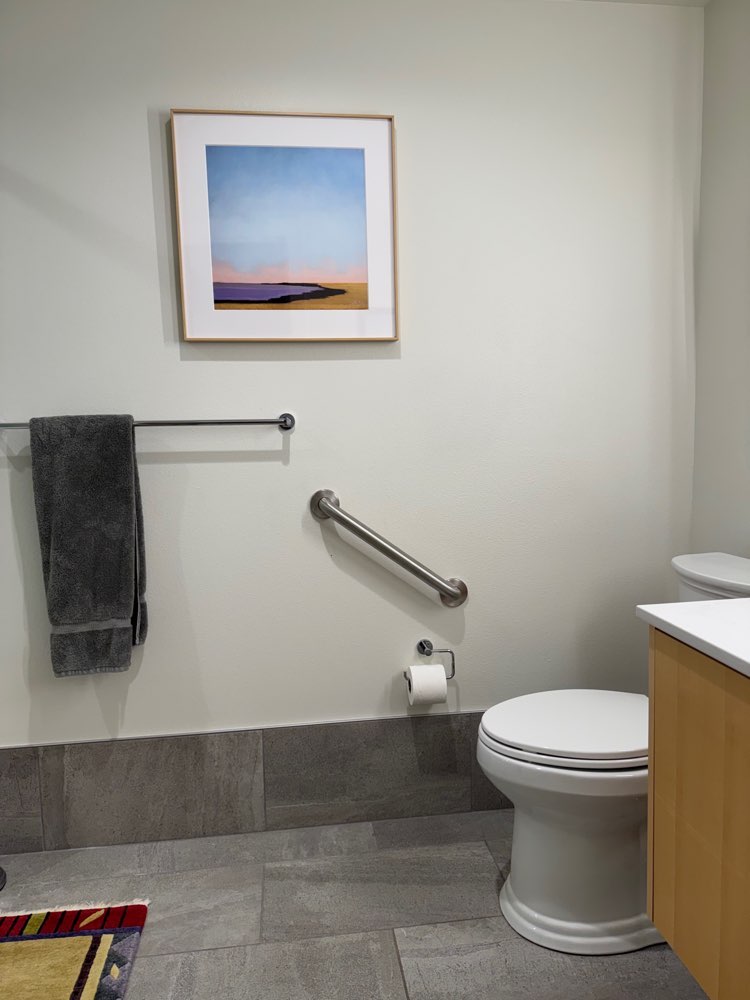
I installed this stainless steel grab bar beside a client's toilet for added safety and support. See the full project: grab bars added throughout a West Seattle condo in one day.
Detailed Explanation
The bathroom is the highest fall risk in the home for aging adults, and most incidents happen at three moments: entering or exiting the shower, using the toilet, and walking on a wet floor. Effective safety changes don't require a full remodel. Upgrades that target those moments can sharply reduce fall risk while keeping the bathroom's function and look.
Seattle's older homes add their own challenges. Many built before the 1960s have cast iron tubs with high step-overs (16–18 inches), plaster walls that need proper blocking before a grab bar will hold, and narrow layouts with little room to maneuver. The most common mistake is underestimating how quickly balance and mobility can change. Changes that seem unnecessary today may be critical within a year or two, so it pays to put the infrastructure in now.
Prioritize the shower first, then the toilet area, then lighting and flooring. Installation quality matters: grab bars mounted to drywall without blocking will fail when they're needed most. A curbless shower removes the step that causes many falls, while a shower chair only reduces risk during washing. The goal is to remove hazards, not just add devices to work around them.
The upgrades that matter most
Grab Bars: 2–3 well-placed bars per bathroom, at the toilet, the shower entry and inside the shower. Proper installation opens the wall to add blocking (typically 2x6 or 2x8 lumber), secures the bars to studs or blocking, then patches and finishes the wall. Surface-mount and suction-cup bars aren't rated to hold a falling adult. Costs and timelines vary. Contact us for a free estimate.
Walk-In or Curbless Shower: Replacing a tub/shower combo with a low-threshold or curbless shower removes the most dangerous step in the house. See the walk-in shower conversion FAQ for scope and pricing. Shower conversions require permits in Seattle.
Comfort-Height Toilet: $450–$850 installed. Raises the seat from the standard 15 inches to 17–19 inches, which makes standing up easier and lowers fall risk during transfers.
Non-Slip Flooring: $15–$25 per square foot for slip-resistant tile (a DCOF rating of 0.42 or higher for wet areas). Existing tile can sometimes be treated with an anti-slip coating for $300–$600 as a faster, less invasive option.
Lighting: $450–$900 for LED lighting with no dark corners, plus low-level nightlights along the path to the toilet for nighttime trips.
Lever Faucets and Hardware: $300–$600 to replace round knobs and faucet handles with levers that work with reduced grip strength.
Roll-Under Sink: $600–$1,200 to replace a vanity with a wall-hung sink that has knee clearance underneath for seated use. The supply and drain lines need insulation or covers so they don't burn or scrape legs.
Blocking for Future Grab Bars: Whenever bathroom walls are open for other work, add blocking at likely grab bar locations, even if the bars aren't going in yet. It costs a fraction of what it would later.
Do you need a full "ADA" bathroom?
"ADA compliant" is used loosely for homes. The Americans with Disabilities Act applies to commercial and public buildings, not private homes. In a residential context it usually means a bathroom built to the intent of the ADA guidelines:
- A 60-inch turning circle for a wheelchair
- The toilet centered 16–18 inches from the side wall, with clear floor space around it of about 60 inches wide by 56 inches deep
- A seat height of 17–19 inches
- A transfer shower at least 36 by 36 inches, or a roll-in shower at least 30 by 60 inches
- Grab bars at the toilet and shower, and controls within easy reach
Many Seattle bathrooms, especially in pre-1980 homes, are 40–48 square feet, with the toilet too close to the side wall and a tub that requires a full step-over. Meeting every guideline in a space that small can mean moving a wall, relocating the toilet drain or reconfiguring the room, which is what pushes a full accessible remodel to $15,000–$40,000 and 4–8 weeks.
Most families don't need every specification. They need a bathroom that safely fits how the person using it actually moves. A targeted plan based on a real assessment usually works better than a generic "ADA remodel" scope, and an occupational therapist's input is especially valuable after a stroke, a hip replacement or with a condition like Parkinson's.
Permits
Work that relocates plumbing, changes structure or adds electrical needs permits through SDCI. Grab bars, toilet replacement and fixture swaps typically don't. Confirm with your contractor before work begins.
Timeline
Targeted upgrades like grab bars, a comfort-height toilet and new hardware usually take 2–5 days. A shower conversion adds about a week of work plus permit review. A full accessible remodel takes 4–8 weeks, including permits, trade coordination and cure time for waterproofing and tile. All of this depends on what's behind the walls, which older homes often surprise you with.
Need Help?
Crest & Level handles the safety and finish side of bathroom modifications: grab bars and blocking, walk-in shower conversions, toilet replacement and hardware upgrades. For full remodels that move plumbing, we work with licensed plumbers and handle the finish work. Start with an aging in place assessment to see what your bathroom actually needs.
Get started
Ready to get started?
Reach out for an estimate. We'll talk through the scope and get back to you within 72 hours.