
April 29, 2026
Why Your Fence or Deck Is Already Rotting — And How to Build One That Won't
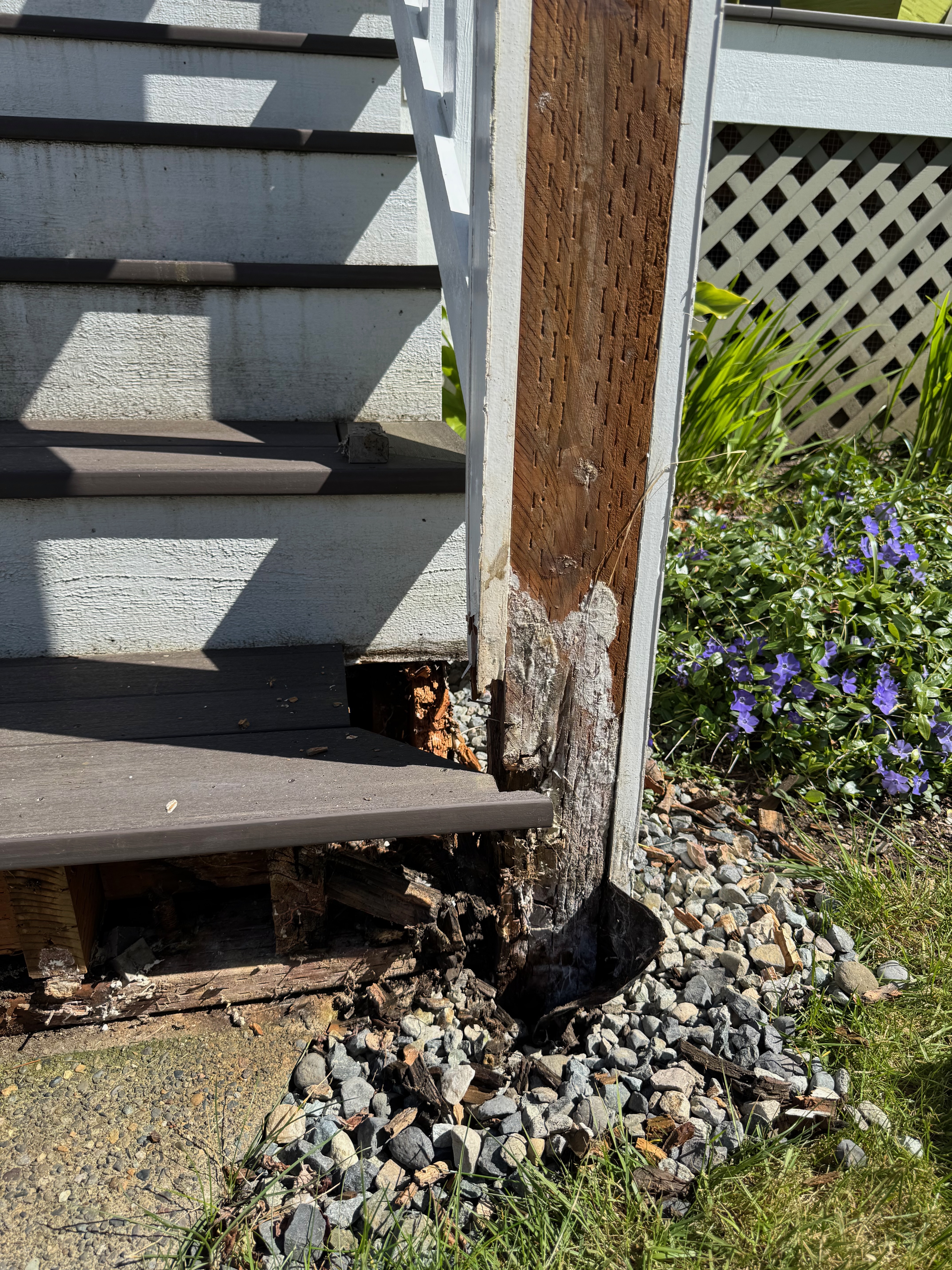
I've been doing carpentry work in Seattle for over 20 years, and lately I keep running into the same problem: fences and decks that should have 20 or 30 years of life in them, failing in under ten. Not because the wood was bad. Not because Seattle's weather is unusually brutal — we know what we signed up for here. Failing because of decisions made at the design and installation stage that made rot inevitable from day one.
If you're planning a fence or deck project, or wondering why the one you have isn't aging the way it should, here's what actually matters.
Rot Doesn't Start in the Middle of a Board. It Starts at the Connections.
Most wood rot I pull out isn't from boards that got wet. It's from wood that got wet and stayed wet — trapped against concrete, buried in soil, or sitting in a pocket where water collects and has nowhere to go.
The three places where I see rot begin, almost every time:
At the post base. When a wooden fence post is set directly into concrete or soil, you've created a perfect rot incubator. Moisture wicks into the end grain — the most absorbent part of any piece of lumber — and the concrete or dirt holds it there. The post rots from the outside in, often before you can see it from the surface. By the time the fence starts leaning, the damage is already deep.
At horizontal surfaces. Flat-top rails, flat cap boards, deck ledgers — anywhere water can pond rather than run off is a problem. Seattle doesn't have a dry season long enough to bail you out. Water sits, end grain soaks, and rot follows.
At wall connections and transitions. Where a deck ledger meets a house, where a post meets a concrete footing, where two materials meet and create a gap — these are places where water finds a home and doesn't leave.
The Post-on-Pipe Approach: The Smarter Way to Set Fence Posts
The single biggest improvement you can make in fence construction is keeping wood off the ground entirely.
The solution that's gained real traction here in Seattle is the post-on-pipe method: a steel pipe or rebar pin is set in concrete below grade, and the cedar fence post is mounted on top of it — elevated completely above the soil line. The wood never contacts the dirt or the concrete. Water drains away from the base instead of pooling against it.
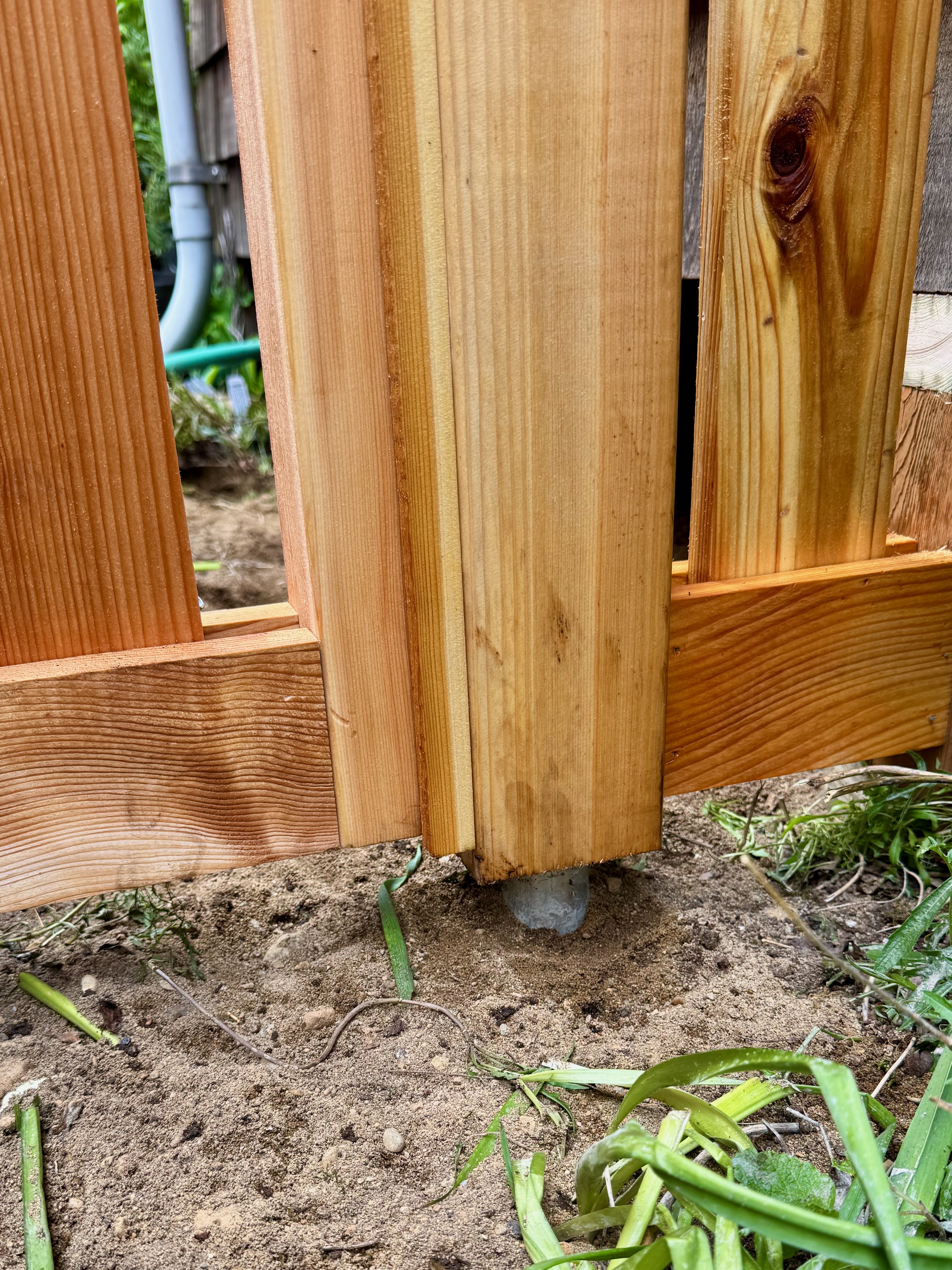
Rain City Fence has built their entire business model around this approach, and it shows in their warranty. When you eliminate ground contact, you eliminate the primary failure point for fence posts in a wet climate.
For deck posts, the same logic applies. Properly installed post bases — the kind that hold the post an inch or more above the concrete footing — dramatically extend post life. A post sitting in a puddle on top of concrete will rot. A post held up in fresh air will not.
Design for Drainage: Water Needs Somewhere to Go
Good carpentry in the Pacific Northwest means designing like water is always coming. Because it is.
Cap rails and top rails should shed water, not collect it. A flat 2x4 cap on top of a fence invites rot. A beveled cap — cut at an angle so water runs off to one side — does the same job and lasts far longer. The difference in material cost is zero. The difference in longevity is significant.
Horizontal deck boards need gaps. Composite decking specs this in automatically. With wood, it's easy to skip. Those gaps aren't just for expansion — they let water drain through instead of pooling on the surface and soaking into the boards below.
Avoid trapping end grain. The end of a board — where the wood fibers are cut across — absorbs water at a rate many times higher than face grain. Any design that buries end grain in a joint, a pocket, or against another surface without protection is creating a rot point. Either seal end grain with a penetrating end-grain sealer at installation, or design the connection so water can't get there in the first place.
Airflow matters as much as drainage. Rot requires moisture and organic material. If wood can dry out between rain events, it's far more resistant. Dense plantings, mulch piled against fence boards, debris trapped against the base of a deck — all of these slow drying and accelerate decay.
Flashing: The Step That Gets Skipped
If you've got a deck attached to your house, the ledger connection is the highest-risk rot point on the entire structure. It's also the one most commonly done wrong.
Flashing is the metal barrier — typically galvanized steel or aluminum — that directs water away from the ledger-to-house connection before it can get behind the siding or into the rim joist. Without it, every rain event drives water into a joint between two materials, where it sits in the dark and does what water does.
Proper ledger flashing:
- Runs behind the siding above the ledger, not just across the top
- Extends past the ends of the ledger, not just the span
- Is sealed at all penetrations — every bolt hole is a potential water entry point
- Uses corrosion-resistant fasteners throughout; mixed metals accelerate failure
Code requires ledger flashing for a reason. When I see it missing or done halfway, I know the clock is already running on that deck.
The Bottom Line
Wood rot in fences and decks that are less than ten years old isn't a material problem — it's a construction problem. The right wood, correctly installed, with attention to drainage and protection at every connection point, will outlast any guarantee you're likely to get.
If you're building new or evaluating work that's already showing wear, these are the questions worth asking: Where is water going when it hits this structure? Is wood in contact with concrete or soil anywhere? Is every ledger and post connection properly flashed and detailed?
Get those answers right at the start, and you won't be replacing fence posts eight years from now.
Crest & Level provides finish carpentry, fence and gate work, deck repair, and home improvement services across Queen Anne, Magnolia, Fremont, Wallingford, Capitol Hill, and Ballard. Work done right, by the person who actually does it. Schedule a Visit.
Get started
Ready to get started?
Reach out to discuss your project and check availability.